
About
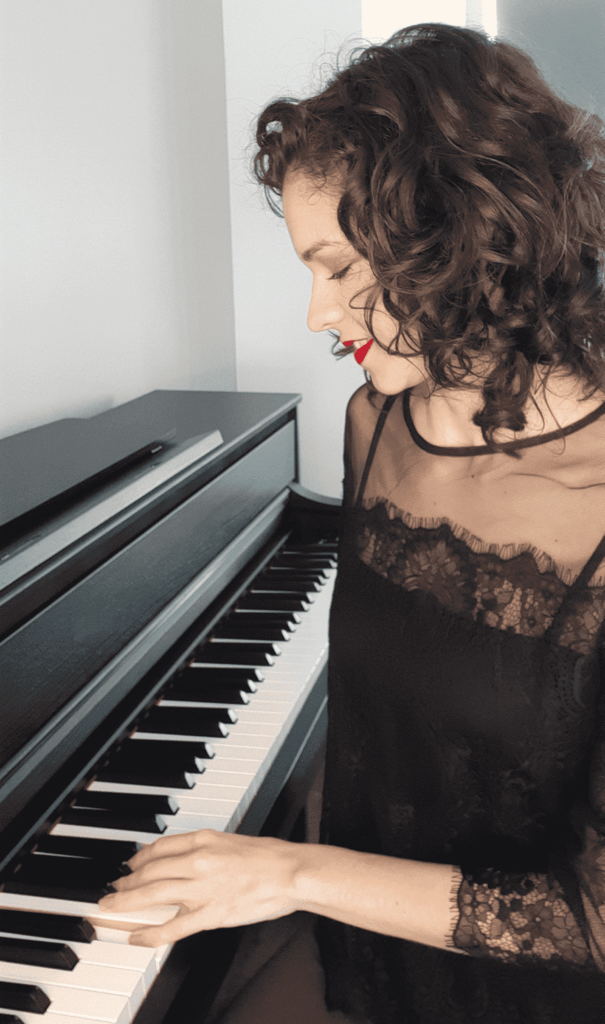
I’m a singer-songwriter, certified voice teacher, and vocal coach based in Veneto, Italy, with a passion for helping singers find freedom, expression, and confidence in their voices.
I began playing piano and singing at a very young age, and I trained in Italy and the United States with top teachers across a variety of methods, including Speech Level Singing, IVA, Estill, Lessac and Somatic Voicework. I have performed in Italy and abroad in solo concerts and musicals, collaborating with professional musicians and producers. In 2017, I released my first album of original songs called Down the Rabbit Hole, recorded in Nashville.
In my voice studio, I combine contemporary voice science with training in functional anatomy, laryngeal manipulation, neuroscience, performance psychology, and acting methodologies. My goal is to help singers develop healthy, efficient technique while staying emotionally connected to their sound and artistry.
With experience as a technician across Classical, Musical Theatre, and contemporary styles (including Pop/Rock and Jazz), I teach singers from around the world—online and in person—in both English and Italian.
I hold a Certificate in Music Theory and Solfege from the “F.A. Bonporti” Conservatory of Trento and Riva del Garda and completed the NSAI certification in Music Business and Songwriting. I earned a Certificate in Vocal Pedagogy from the Institute for Vocal Advancement in 2018, and since 2021, I’ve focused on Musical Theatre Voice Pedagogy, mentored by leading experts in the field.
I continue to study voice regularly, attend masterclasses, and present at workshops—because I believe the best teachers are always learning.
My Teaching Philosophy
My approach is based on Cross-Training, which means training the voice in both classical (Belcanto) and contemporary styles (Mix/Belt) to achieve maximum flexibility and strength, preparing you for any career path you choose.
As a teacher, I believe in solid, long-term technique, not gimmicks or “quick tricks” that merely cover up deeper issues. Singers are athletes, and like athletes in sports, they need a strong foundation in technique, as well as knowledge of how to properly care for their body and voice.
For sustainable singing, your voice must be balanced. Whether you’re belting or singing opera, a solid foundation in your lower register (chest voice or mode 1) and access to your upper register (head voice or mode 2) are essential. We’ll begin by working in the register you’re least familiar with. Once both registers are developed, we’ll start blending (mixing).
All good singing, of any genre or style, can be considered a mix in which both sides of the voice (both registers) are functioning and balanced. “The mix” isn’t one thing. The amount of chest voice and head voice in the balance will determine the kind of mix. Learning how to make all these various sounds is what gives you options as a singer.
In my approach, mix/belt technique is built on healthy speech-based sounds. So, it’s essential that you start with a healthy speaking voice. We’ll focus on that first. The mechanism for speaking and singing is closely connected. As the saying goes, “Si canta come si parla” (one sings as one speaks), and “Chi pronuncia bene, canta bene” (those who speak well, sing well). Once you can produce clear, effortless call sounds, you’ll be ready to tackle the mix/belt repertoire successfully.
Singers often perform better when they form an emotional connection to the words they sing. I encourage singers to approach even technical vocal exercises with intention, because I believe that technique and interpretation inform each other. Both are equally important for authentic expression. Singing is primal—when done freely and efficiently, it’s similar to how babies cry to communicate their needs. It’s a raw, visceral experience.
Anyone can learn to sing, but many struggle with unnecessary tension that hinders freedom of movement, resulting in limited range, power, dynamics, agility, and recurrent fatigue. My goal as a voice teacher is to help you eliminate unnecessary tension, conditioning your voice to work more efficiently and expressively. This way, you can sing with freedom and confidence across any style and range.
If you have any questions about how I teach, please don’t hesitate to reach out.